 Cleanzine: your weekly cleaning and hygiene industry newsletter 26th November 2026 Issue no. 1236
Your industry news - first
The original and best - for over 20 years!
We strongly recommend viewing Cleanzine full size in your web browser. Click our masthead above to visit our website version.


Sharpak Zero reusable sharps bins inject more sense into sustainability
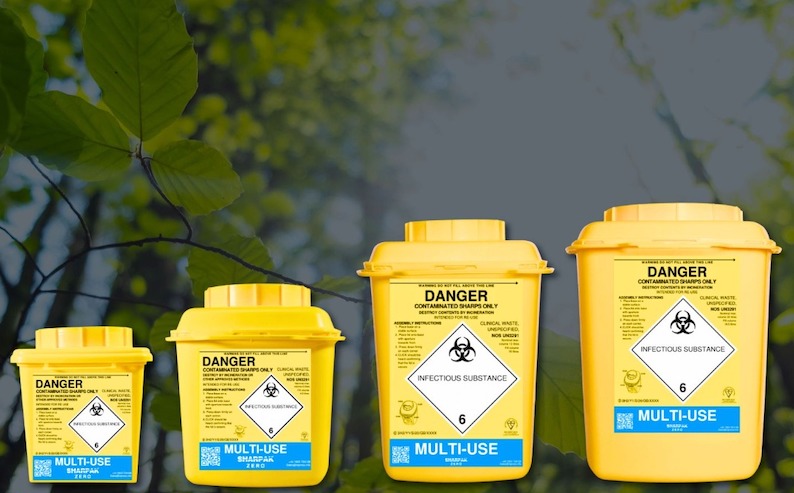 Sharpak Healthcare has quantified the carbon benefits of its Sharpak Zero reusable sharps containers through a Life Cycle Assessment (LCA) conducted by sustainability consultancy Tunley Environmental, demonstrating emissions reductions of up to 88.6% compared with equivalent single-use alternatives.
Sharpak Healthcare develops clinical waste containers, including its Sharpak Zero range of reusable sharps bins. Unlike traditional single-use containers, which are typically incinerated after use, Sharpak Zero containers are designed to be collected, emptied, sanitised, repacked and returned to service.
While the potential benefits of reuse were recognised, Sharpak Healthcare wanted robust evidence to demonstrate the environmental performance of the system. Comparing reusable and single-use products requires emissions to be considered across the full lifecycle, including the additional collection, cleaning and redistribution processes associated with reuse.
Tunley Environmental conducted a Life Cycle Assessment in accordance with ISO 14067, comparing the greenhouse gas emissions associated with Sharpak Zero reusable containers against equivalent single-use alternatives from raw material extraction through to end-of-life disposal.
For the Sharpak Zero 60 container, the assessment found that one reusable container used 100 times produced 17.8Kg CO2e, compared with 146 kg CO2e from 100 equivalent single-use containers. This represented an 87.8% reduction in carbon emissions.
The assessment also considered 1,000 uses. Across this scenario, the reusable container produced 166Kg CO2e, compared with 1,458Kg CO2e from 1,000 equivalent single-use containers, resulting in an 88.6% carbon reduction.
The findings give Sharpak Healthcare quantified evidence of the carbon savings achievable through its reusable system, while also providing greater visibility of where emissions occur throughout the product lifecycle. This insight can support future environmental improvements and provide customers and procurement teams with a stronger evidence base when assessing the environmental performance of reusable sharps containers.
"Working with the Tunley team has been collaborative from the off,” says Kieron King, standards & sustainability manager at Sharpak Healthcare. “They came back to us with questions, worked through gaps in the data with us directly and clearly wanted the number to be right as much as we did. You could tell there was a genuinely qualified team behind it."
Dr Annaelle Hip Kam, Sustainability Scientist at Tunley Environmental, adds: "The results show why it is so important to assess the full lifecycle of a product rather than relying on assumptions. By looking at the complete system, we were able to give Sharpak quantified evidence of the carbon benefits their reusable containers can deliver."
The assessment demonstrates the importance of using product evidence when communicating the environmental benefits of reusable products. Rather than relying on assumptions that reuse automatically results in a lower impact, Life Cycle Assessments enable organisations to quantify the full lifecycle implications and substantiate environmental claims with science-based data.
The full Sharpak Healthcare: ‘Measuring Carbon Benefits of Reusable Sharps Bins’ case study is available on the Tunley Environmental website, along with the interview with Kieron King from Sharpak Healthcare.
www.tunley-environmental.com | www.sharpaks.com
26th November 2026