 Cleanzine: your weekly cleaning and hygiene industry newsletter 22nd October 2026 Issue no. 1231
Your industry news - first
The original and best - for over 20 years!
We strongly recommend viewing Cleanzine full size in your web browser. Click our masthead above to visit our website version.


England's waste system to undergo its biggest reform in April
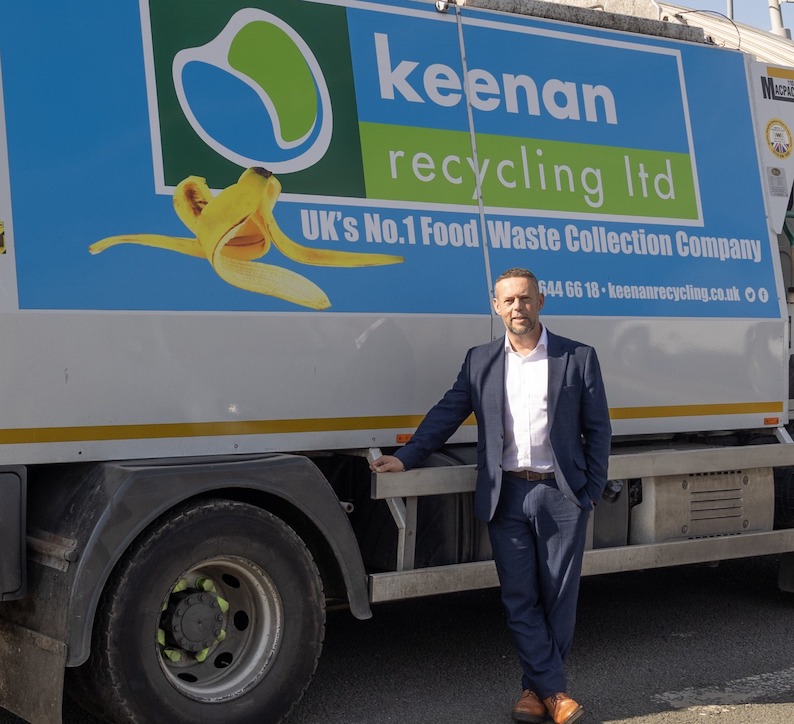 From April 2026, waste management in England will change forever. What has long been a confusing patchwork of local rules will be replaced by a single national framework under the Government's Simpler Recycling reforms. While the aim is clarity, the consequences of inaction are anything but simple.
With £110 fixed penalties, escalating fines of up to £5,000 and rising landfill costs, businesses that fail to prepare could face serious financial and operational risk.
And according to Grant Keenan, managing director of Keenan Recycling, the biggest mistake organisations can make is waiting until the last minute. "We are always here to help businesses comply; leaving it too late puts pressure on systems, resources – and, ultimately, the business itself," he warns.
National reset: what Simpler Recycling really means…
From 2026, all households and businesses in England will be required to separate waste into four clear streams:
* Residual (non-recyclable) waste
* Food waste
* Paper and card
* Dry recyclables (plastic, metal, and glass)
The intention is to end the long-criticised ‘postcode lottery’ where recycling rules varied wildly between councils, creating confusion and contamination. For businesses, however, this isn't just about sorting bins differently. It's about legal compliance, cost control and operational readiness.
Keenan Recycling has been closely tracking these changes, and Grant is clear: this is not a soft transition.
Fines, sanctions, and rising costs…
Under the new rules, businesses with 10 or more full-time employees fall within scope, even if staff are spread across multiple sites. A company with five employees at two locations still qualifies. Responsibility may also extend to landlords and facilities management companies presenting waste on a business's behalf.
Non-compliance can result in:
* £110 fixed penalty notices
* Civil sanctions
* Fines exceeding £5,000
* Increased landfill costs due to contamination
This comes at a time when landfill tax has already risen by 20%, from £103.70 to £126.15/tonne. For many organisations, especially those producing food waste, the financial case for compliance has never been stronger.
Grant sees this clearly: rising costs are no longer a distant threat - they are already here.
Why ‘last-minute compliance’ is the biggest risk…
One of the strongest messages coming from Granthe is the danger of delayed action. With 2026 already a week in, demand for compliant waste infrastructure, bins, collections and training will surge.
"Businesses that approach us late may find we simply can't allocate resources fast enough," says. "Especially when multiple sites, food waste streams or new infrastructure are involved."
This is not fearmongering – it is logistics. Waste services rely on planning, vehicle routing, container availability and trained personnel. Early engagement, explains Grant, allows companies like his to design systems that work efficiently and compliantly, rather than rushed solutions that increase risk.
Food waste - compliance line businesses can't ignore…
Food waste separation is one of the most significant changes under Simpler Recycling. Businesses producing food waste, from hospitality and healthcare to manufacturing and offices, will be required to segregate it correctly.
Improper disposal doesn't just risk fines. It leads to contamination of recycling streams, higher landfill charges and reputational damage.
Keenan Recycling has long specialised in food waste management, and Grant believes this expertise will be critical in helping clients navigate the transition smoothly if they engage early.
Leadership through preparation, not panic…
While headlines focus on fines, Grant's message is ultimately about opportunity through preparation. Simpler Recycling offers businesses a chance to reduce waste, cut costs and operate more sustainably but only if they act proactively.
The companies that will succeed in 2026 are not those scrambling to comply in March, but those planning systems, training teams and aligning processes, now.
Keenan Recycling's role, under Grant’s leadership, is clear: to guide businesses through this change with clarity, credibility, and practical support and not last-minute fixes.
Countdown has started…
April may feel distant, but in operational terms, it is fast approaching. Infrastructure, contracts, education and compliance frameworks take time to implement properly.
Grant's warning is simple and direct: don't wait for enforcement letters to tell you what preparation could have prevented.
Simpler Recycling is coming. The fines are real. The costs are rising. And the businesses that act now will be the ones best placed to thrive in the new waste landscape.
Keenan Recycling (part of Biffa Group), the largest food waste collection company in the UK, is dedicated to reducing landfill waste and supporting the transition to renewable energy through anaerobic digestion. By transforming food waste into biofuel, it is playing a crucial role in reducing emissions and promoting sustainability across the UK. The company collects food waste from every postcode in Wales, Scotland, and England on its own fleet. Food waste is collected from businesses and is then transformed into either compost, renewable electricity, gas, heat, or fuel.
8th January 2026