 Cleanzine: your weekly cleaning and hygiene industry newsletter 22nd October 2026 Issue no. 1231
Your industry news - first
The original and best - for over 20 years!
We strongly recommend viewing Cleanzine full size in your web browser. Click our masthead above to visit our website version.


CLEEN study drives 34% drop in hospital-acquired infections
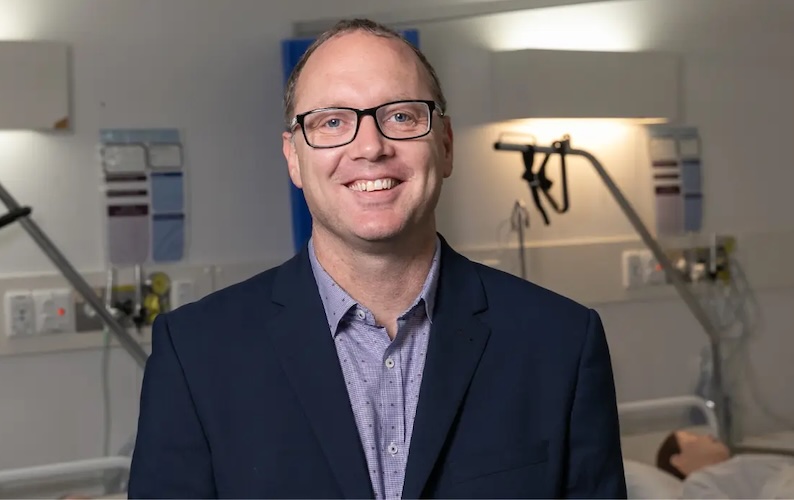 Hospitals around Australia are starting to adopt a simple cleaning intervention that is cutting infection rates, saving money and freeing up hospital beds. The practice, based on research led by Hunter Medical Research Institute, targets shared medical equipment that is often overlooked in routine cleaning and is proving to be a cost-effective way to improve patient care.
Known as the CLEEN study, the NHMRC Investigator Grant-funded clinical trial was conducted at Gosford Hospital and led by Avondale University's professor of health services research and nursing and Honorary Professor at the University of Newcastle, Brett Mitchell, from HMRI's Infection Research Program. It found that enhanced cleaning of shared medical equipment resulted in a 34% drop in hospital-acquired infections.
Shared equipment such as blood pressure cuffs, commodes and drip stands are used across multiple patients each day but often with little or no cleaning in between. Despite infection control guidelines, cleaning is rarely assigned to a specific person which can lead to oversight.
"It sounds like a simple thing, but it's a problem that has persisted for decades, across many hospitals and across the world," explains Professor Mitchell.
To address this, the trial introduced an additional three hours of cleaning per ward each weekday. Dedicated, trained staff used detergent-disinfectant wipes to clean shared equipment. Cleaning compliance increased from about 20% to 70%.
The result was a 34% reduction in hospital-acquired infections. The research also estimated that for every 1,000 patients the intervention would free up 384 bed days, reducing delays for elective surgeries and emergency department admissions.
"Infections are not only harmful for patients, they also extend hospital stays and drive up diagnostic and treatment costs," argues Professor Mitchell. "By reducing them, we're improving patient safety and creating a more efficient health system."
The study also examined cost-effectiveness. The cost of hiring additional staff and supplies was outweighed by the savings from fewer infections, shorter stays and lower treatment costs.
"This is one of those rare health interventions that improves outcomes and reduces costs,” Adds Professor Mitchell. “It's a win-win."
Since publication, the study has started to influencing hospital policy. A recent survey found that around 30% of Australian hospitals have implemented the cleaning approach, either fully or in part. Many others are considering it. Internationally, the study has attracted attention in the UK, Norway, Singapore and Japan.
What makes the CLEEN study particularly significant is its scope. Most infection control trials focus on a specific bacteria or infection type. This study looked at all adult inpatient infections, offering broad insight and strong evidence.
Although the focus was hospital wards, the findings are also relevant to other settings where equipment is shared such as aged care and childcare.
"It's not about creating sterile environments," explains Professor Mitchell,"but it shows that smart, evidence-based cleaning helps protect people and improves care."
The benefits go beyond infection control. Reducing infections means patients recover faster and are discharged sooner, easing pressure on busy hospitals. This is especially important in Australia's public health system where bed shortages and waitlists are ongoing challenges.
As we marked Clean Hospitals Day on October 20th, the research served as a reminder that small changes can have a big impact, not just in hospitals but across the broader healthcare system. It also highlights the value of investing in practical solutions backed by solid evidence.
With this evidence in hand, hospitals now have a clear path to improving safety and efficiency. The CLEEN study is a powerful example of how local research can solve global problems, providing a practical model that can be adapted worldwide.
https://cleenstudy.com | https://hmri.org.au
23rd October 2025