 Cleanzine: your weekly cleaning and hygiene industry newsletter 22nd October 2026 Issue no. 1231
Your industry news - first
The original and best - for over 20 years!
We strongly recommend viewing Cleanzine full size in your web browser. Click our masthead above to visit our website version.


Hospitals combat rise in ‘nightmare bacteria’ with LightStrike UV technology
 Infection rates from drug-resistant ‘nightmare bacteria’ rose almost 70% in the US from 2019 to 2023, according to a new study published by Centers for Disease Control & Prevention researchers. These bacteria-- Carbapenem-Resistant Enterobacteriaceae (CRE) have developed resistance to carbapenem antibiotics, a powerful class of drugs often used to treat infections that don't respond to other antibiotics.
CRE infections often spread by direct contact with an infected person's bodily fluids or via surfaces. Studies have shown that in healthcare facilities, traditional liquid chemical cleaning often leaves dangerous microorganisms (like CRE) behind and 20-40% of pathogen transmission events are from contaminated surfaces.
To make matters worse, some pathogens are growing more resilient not just to antibiotics, but to certain cleaning disinfectants as well, posing an even greater risk to hospital patients and staff.
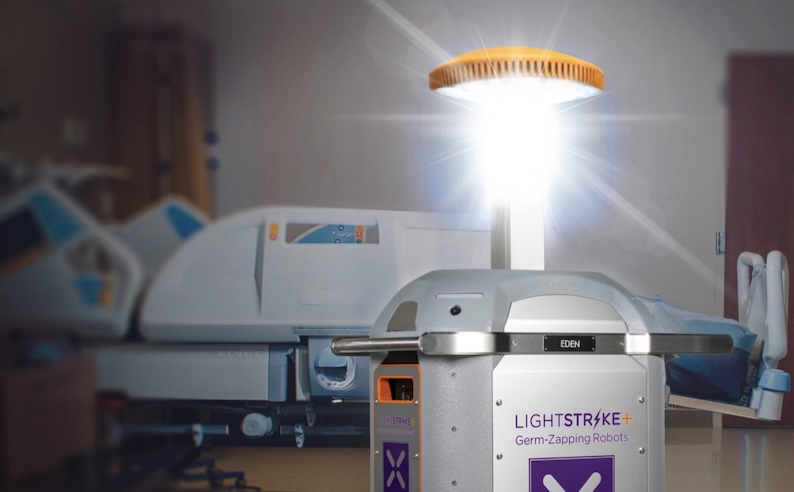
Many of the world's leading hospitals have enhanced their cleaning & disinfection strategy by investing in powerful ultraviolet (UV) light technology to reduce the number of pathogens on surfaces. In a milestone achievement, hospitals using Xenex LightStrike Germ-Zapping Robots recently completed 44 million cycles.
Use of the LightStrike technology enhances the hospital's processes for cleaning rooms and removing the pathogens so they don't transmit from surfaces to patients, visitors, and staff. LightStrike delivers consistent, measurable microbial reduction on exposed surfaces in patient environments in as little as two minutes.
Utilised in more than 1,200 hospitals and healthcare facilities worldwide, including hospitals, skilled nursing facilities, retirement homes and hospices, Xenex has a proven track record of success.
As of September 2023, the US’s Food & Drug Administration body is regulating UV devices used to reduce pathogens on non-critical medical device surfaces in healthcare facilities. If a UV device is being used to reduce pathogens anywhere in a hospital where non-critical medical equipment is present - like beds, IV poles, etc. - then it needs to be FDA authorised.
Xenex was the first UV robot company to achieve FDA authorisation for a ‘Whole Room Microbial Reduction’ device. The LightStrike+ robot utilises powerful pulsed xenon UV light to quickly reduce the number of pathogens on surfaces in healthcare facilities - including CRE, MRSA and Clostridioides difficile (C.diff). The FDA designation signifies that the LightStrike+ robot has undergone rigorous testing and evaluation to demonstrate its safety and efficacy in reducing pathogens on surfaces in unoccupied healthcare rooms.
"The world's leading hospitals use LightStrike technology as part of their comprehensive disinfection strategy because they understand the importance of a clean environment,” says Morris Miller, CEO of Xenex. “Hospitals that are concerned about CRE and other deadly pathogens should be using LightStrike robots.”
2nd October 2025