 Cleanzine: your weekly cleaning and hygiene industry newsletter 22nd October 2026 Issue no. 1231
Your industry news - first
The original and best - for over 20 years!
We strongly recommend viewing Cleanzine full size in your web browser. Click our masthead above to visit our website version.


Continuity planning now the norm for UK Businesses
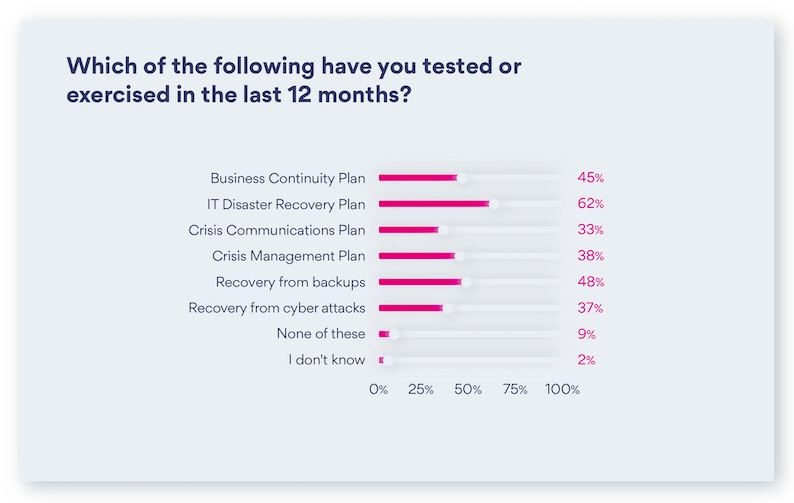 Databarracks' latest Data Health Check shows that UK organisations are moving beyond simply having continuity plans - they're putting planning into practice through more frequent testing and exercising of their response and recovery processes.
Since the annual survey began in 2008, continuity has steadily climbed the agenda. In 2025, 85% of UK organisations now have a business continuity plan, compared with just 56% in 2015.
Organisations with business continuity plans are also backing them up with broader response structures. Alongside their BC plans,
* 92% also have an IT disaster recovery plan
* 82% have a crisis management plan
* 80% have a crisis communications plan
And it doesn't stop with planning - in the past year, nine in 10 organisations also tested elements of their recovery process. Testing and exercising are now seen as essential to closing the gap between theory and execution - especially as tolerance for downtime continues to shrink. In 2025, a majority of organisations say they couldn't survive more than half a day without critical IT systems.
"This year's Data Health Check shows a positive shift: continuity isn't just about documents anymore - it's about capability,” reveals Chris Butler, resilience director at Databarracks, a company which delivers award-winning IT resilience and continuity services. “The organisations that test regularly are the ones that recover confidently.
"Plans give structure. Testing gives certainty. We're seeing more organisations learning from real incidents and exercises, then feeding those lessons back into their continuity processes.
“That's especially important when recovery doesn't go to plan - and this year, nine in 10 organisations that experienced a cyber attack said their recovery could have been more effective. More testing and exercising was the most-cited route to improvement, closely followed by better coordination of response and improved plans and documentation."
However, the research also highlights a continued gap between large and small organisations. While almost all large organisations (97%) have a business continuity plan, only 58% of smaller organisations do - and they are significantly less likely to test those plans regularly. Progress has been made - but levelling up resilience across organisations of all sizes is now essential.
Key findings from the 2025 Data Health Check:
* 85% of organisations have a business continuity plan
* 89% tested elements of their recovery process in the last 12 months
* Testing and exercising are now the most effective ways to improve confidence in continuity
* Updating continuity plans and testing and exercising are among the top resilience priorities for organisations in 2025, identified as such by 36% and 33% respectively
* Most organisations say they could not survive more than half a day without critical IT systems
Download the full report at:
Explore the highlights at:
https://datahealthcheck.databarracks.com/2025
11th September 2025