 Cleanzine: your weekly cleaning and hygiene industry newsletter 15th October 2026 Issue no. 1230
Your industry news - first
The original and best - for over 20 years!
We strongly recommend viewing Cleanzine full size in your web browser. Click our masthead above to visit our website version.


University biotech researchers patent wastewater filtering device that reduces potable water demand
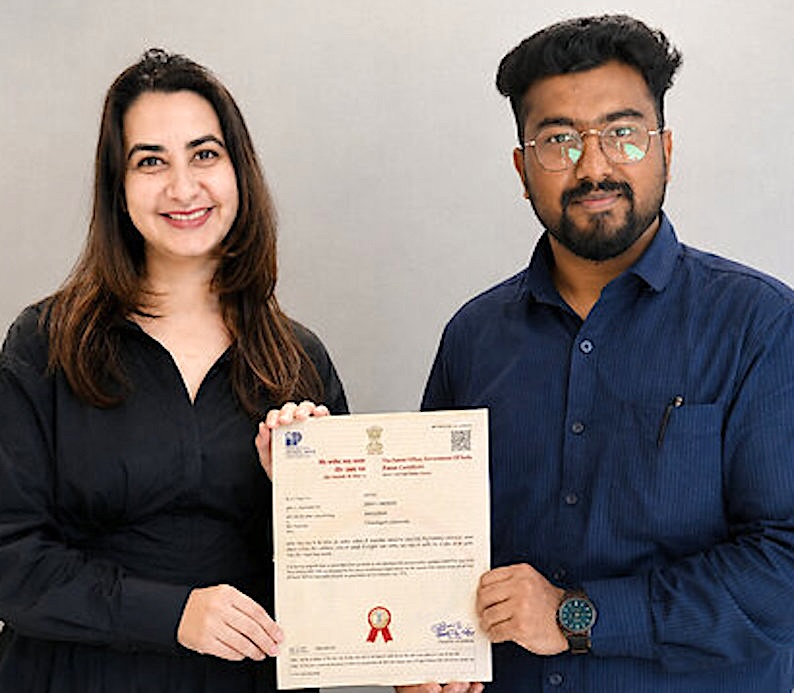 With 80% of water supplied to households in India released as wastewater, while over 600,000,000 people in the country are facing severe water crisis due to extreme groundwater over-extraction, erratic monsoons and rapid urbanisation, a team of Chandigarh University (CU) researchers has conceived and patented a scheme that reduces the demand for fresh potable water.
The innovative wastewater filtering device is designed to provide a two-stage treatment for kitchen wastewater before it enters the drainage system, while also facilitating collection of the filtered water for suitable domestic uses including gardening, irrigation and outdoor-area cleaning.
Chandigarh University researchers including Prof (Dr) Anu Kumar, Associate Professor, Department of Biotechnology, CU along with two students of Biotechnology, Bhanu Krishan and Shivani (both pictured) have been granted a patent for this invention titled 'Waste Water Filtering Device' by the Patent Office, Government of India.
"The idea for this device came from the water scarcity experienced in Shimla in 2018,” explains Prof Kumar. “This water crisis made me think that while water is an essential and limited resource, much water gets wasted in household activities which don't require potable water. According to the Economic Survey 2025-26, India is among the top generators of wastewater in the world, with almost 112 billion litres of urban wastewater being generated daily but only 8% of wastewater generated being recycled and reused. So there is a need to reuse wastewater wherever possible rather than allowing it to directly go into the drainage system as over 600,000,000 people in India are experiencing high to extreme water stress. The device was therefore designed as a simple, affordable solution to treat commonly generated household wastewater, particularly kitchen wastewater and collect it for suitable reuse. The broader aim was to make the best possible use of available water, reduce wastage and contribute to water conservation."
Explaining the working of this device, Prof Kumar says:
"When wastewater get generated during washing of utensils, it enters the modified strainer, the main housing of the filtering device. From there, it passes through two successive treatment sections. The first contains multiple polyurethane sheets coated with silica along the inner walls of the strainer. These sheets serve as the primary filtering and absorbing material and are intended to absorb oily constituents and soap micelles present in kitchen wastewater. The wastewater then passes through a second section containing activated charcoal, which provides second adsorption stage for contaminants in the wastewater.
"Thus, the two sections work sequentially, with the first stage primarily addressing oil- and soap-containing constituents while the activated charcoal providing further adsorption of contaminants. The filtered water is then conveyed through a tail pipe connected to the strainer and directed into an attached storage tank where the treated water is collected for further suitable non-potable domestic uses."
Prof Kumar says the this treated wastewater collected in the storage tank can be used for watering household plants, lawns and other vegetation. It could also potentially be used for toilet flushing, floor and outdoor-area cleaning, washing of courtyards or other utility areas, thereby reducing the demand for potable water. The basic idea is to divert relatively less-contaminated household wastewater from the drainage system, remove major constituents such as oil, grease and soap micelles through the polyurethane and activated-charcoal stages and collect filtered water for appropriate non-drinking applications.
Congratulating Chandigarh University researchers for getting the patent for the 'Waste Water Filtering Device', Deepinder Singh Sandhu, senior managing director, Chandigarh University said:
"This achievement reflects the strong research and innovation eco-system at Chandigarh University to support research excellence and intellectual property generation for advancement of technology. Chandigarh University's students and faculty members have filed more than 6,100 patents out of which 5,800 patents have been published and 260 patents have been granted. Chandigarh University has been ranked number one as a single institution in India for filing highest number of patents. CU's 44 faculty members featured in Stanford University-Elsevier list of the world's top 2% scientists.”
10th September 2026